2025 was the year my legs stopped working.

What I learned from my Hamstring Injury
- Sometimes, slowing down, and doing nothing is what your body needs
- Accept the situation. It’s happened: You can’t go back.
- Time Heals. You need to let it.
- People are essential. Ask for help.
For the better part of 2025, I could not walk. Until then, I had been regularly sprinting, skipping, and doing plyometrics for over a decade, And then I suddenly couldn’t use my legs . Three short steps down the sidewalk, or from my bedroom to the kitchen, and the muscles and tendons behind my knees, including a specific part of the knee, known as the pes anserine where three major quad & hamstring muscles meet, would scream. Moving around was pure agony. During a trip to the physiotherapist that I braved on public transit, I could barely walk up four stairs, let alone open the door to exit from the station. I was overwhelmed with gratitude when a lone man stopped to help. “Thank you,” I told him, the tears glistening in my eyes. “Not many people help.”
Getting up from a chair; brushing my teeth, sleeping; standing to shower, and even putting one foot in front of the other – were lessons in torture. Finally, the importance of muscles that I had seemingly never considered, began dawning on me.
It was a hamstring strain. A dull ache behind my left knee whenever I walked early in February first led me to my physiotherapist, who identified the issue and told me not to run or jog, until I’d strengthened that hamstring. I stayed away from such activities, but I walked. A lot. All over the city; I’m a walker and I’m not a fan of public transit.
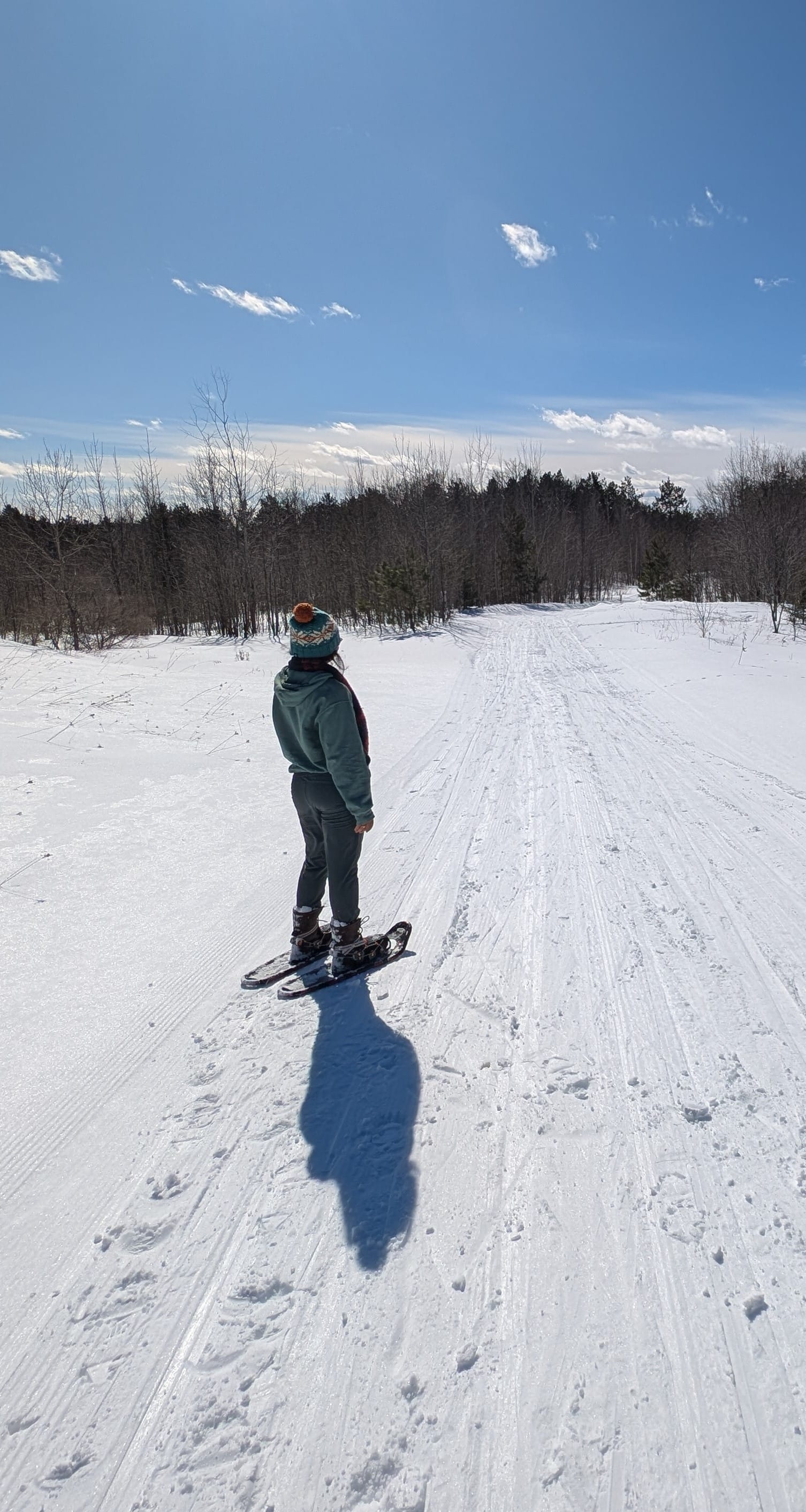
Then one fateful day in March, after an Airbnb trip spent on activities like cross-country skiing, and a few dedicated hours of snow-shoeing,
I walked to get groceries. I walk relatively fast– in fact, before my injury, I think I did everything a little too fast; maybe my nearing 40 body needed me to slow down. As I began the walk, I felt something pop behind my knee. “Huh, that was weird,” I thought, as I kept walking, feeling as though I needed to walk faster to tell myself that I was fine. So I did. I jaunted briskly to the store. Then, carrying a heavy bag of groceries in one hand, I briskly jaunted back. Within 200m of my apartment, things went awry. My knee was the first to feel something. Every step I took felt like fire. Usually, a bit of a warm-up and I’d be fine. But even as I kept walking, it didn’t ease up. It only made things worse.
The next few days are a blur. A visit to the physiotherapist revealed nothing; she was going away on vacation, but it seemed bad, and she wanted me to leave it alone until she returned.
Unsatisfied with what I mistook as callousness at my condition (in hindsight, it was anything but), I sought a new physiotherapist nearby. I was due to leave on a trip in just over a month, and I needed to make sure I was well enough to go away. He didn’t make my condition better; in fact, he made it worse. The exercises he prescribed were aggressive, and one day turned into 30….then two months. Eventually, five. A sports doctor I visited after a few weeks of these symptoms could find no issue, no tear or strain. One cancelled international vacation, and many long days spent immobile: here are five things my body taught me in 2025:
Sometimes, slowing down, and doing nothing is what your body needs.
We live in a time of doing. We are told we need to do more, create more, produce more, in order to thrive, to grow. Consider that our system, founded on capitalism, demands perpetual growth and output. But that’s not really how nature works. Sometimes what our bodies truly need, is its opposite: stillness; the cessation of activity: rest.
Zen masters would meditate, to find stillness within themselves. Eastern and Christian practices have espoused silence: mauna, in Hinduism, or Noble Silence, in Buddhism.
What my body desperately needed, after the initial injury, was rest; unfortunately I didn’t heed my original physiotherapist’s advice. I spent days scouring Reddit, trying to learn from other people’s experiences, and found endless opinions and advice and exercises to overcome a hamstring strain. Because my hamstrings needed rest, the exercises only aggravated my hamstring tendons, as well as my other leg muscles; my calves would cramp and spasm simply going down the stairs, I had terrible pain in the tendons, my quads felt like they were on fire. I kid you not when I say that absolutely nothing helped but rest: lying flat, not using my legs, any and every chance I got.
Our bodies simply can’t be rushed. I’ve always been someone who moves fast. I walked fast, I ran fast, and I lost patience quickly with things that took time. I had never thought that I could reach a point in my life where none of this was possible any longer. That I could no longer race with ease across an intersection; do a series of lunge jumps at the beach; sprint-run intervals in the spring; or race up stairs two at a time. Slowing down was a huge mental hurdle I needed to overcome.
Accept the situation. It’s happened: You can’t go back.
I spent so many hours trying to figure out how this had happened, wishing I could turn back time, wishing I had done things a little differently. Maybe I shouldn’t have gone to the lower-body strength classes where the injury first occurred; maybe I should have just accepted that I was getting older, and to stop exercising so much. It’s not like I was a professional athlete…
Obviously, such thoughts are silly; human bodies were meant to move and there was no reason to give up - nothing good comes from staying in one’s safe zone permanently.
And the main thing is – once an injury has happened, there’s no way to change back the clock. Worrying about the past is wasted energy better used to determine how best to move forward.
Time Heals. You need to let it.
In the thick of a major event in our lives, whether it’s physical or emotional, we struggle to see beyond, to a time when our present condition has improved. It’s like we’re lost in a thicket of trees – we can’t see what’s ahead because the plants are too dense. It becomes difficult to believe that we will ever move on from the space we are occupying; but if there is anything that is true, it is change. Change brought us here; change will carry us forward.
It’s in this liminal space that healing happens, but we must allow it to. Not fester in self-pity, or anger, or frustration for too long; a little is okay, but too much and we may hinder our body’s ability to heal.
People are essential. Ask for help.
I needed people to help me buy groceries; I needed Ubers and Lyfts to get me around, and I needed to order food, or spend time at my parents’ house, because I couldn’t stand up or get around in my kitchen long enough to cook. Doing everything as though things were normal, simply would not have worked.
I would constantly email my physiotherapist to seek some reassurance, my condition feeling like it was getting worse rather than better – and she would reply, encouraging me, assuring me to keep going, that I would get better. In some ways, she became my mental health therapist, as much as my physiotherapist.
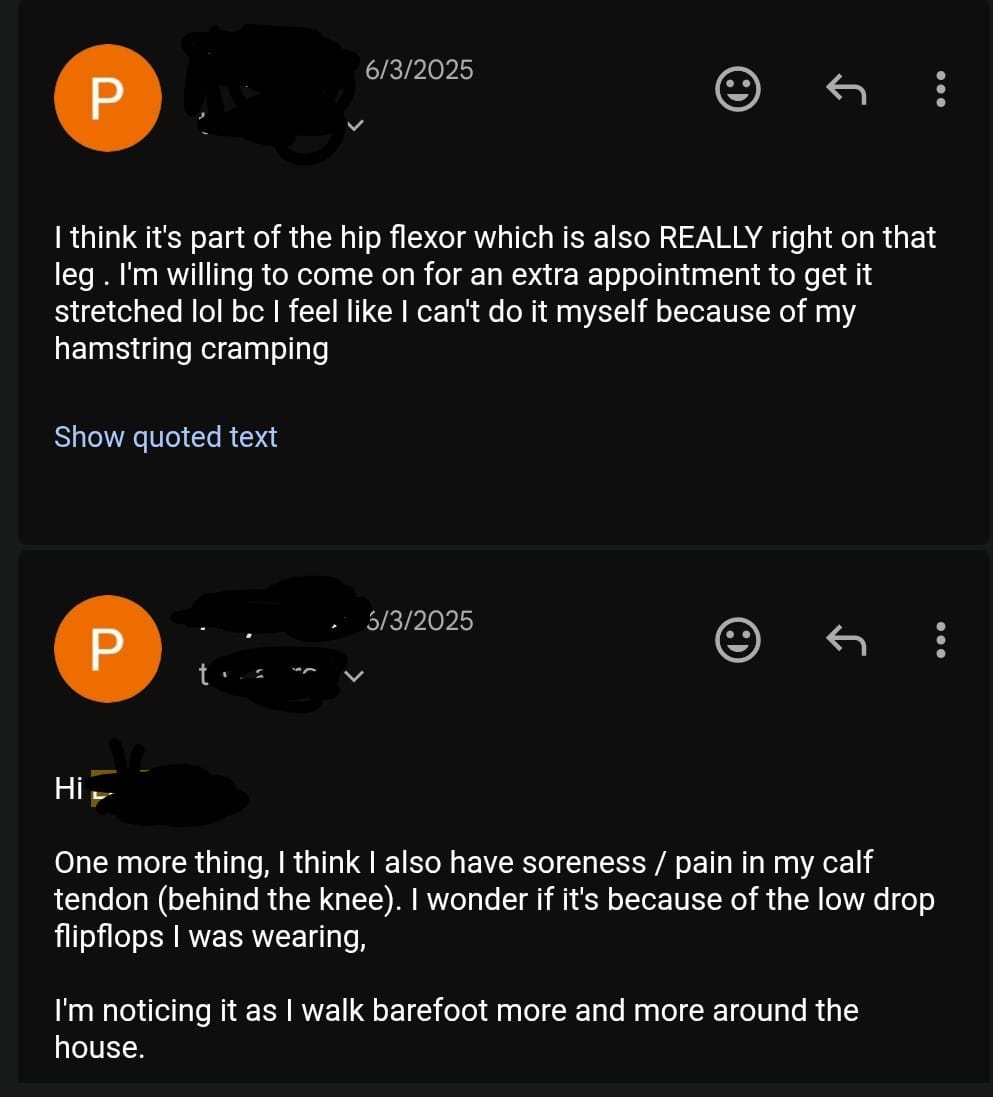
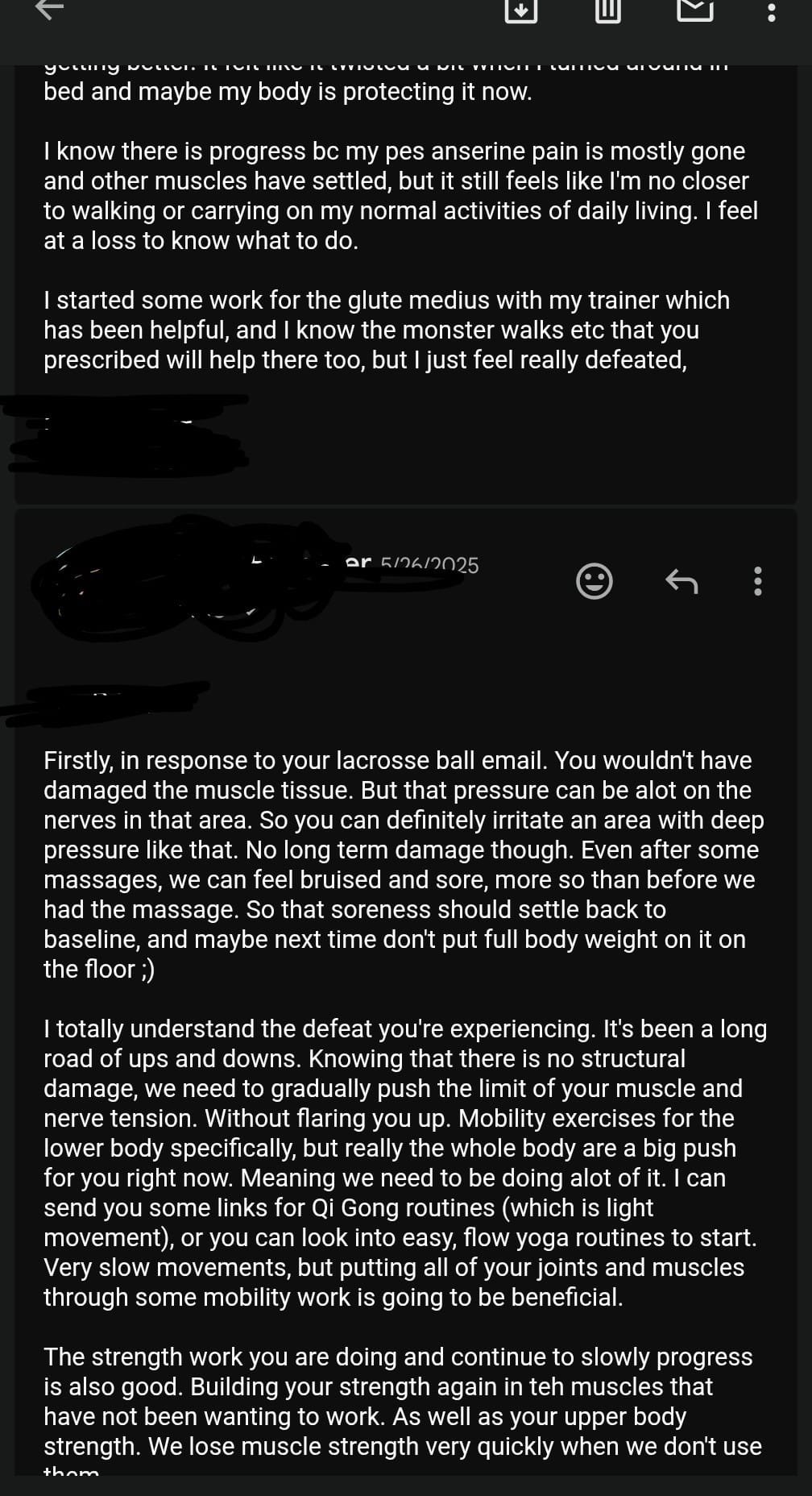
Ultimately, I began to see a trainer who practices a functional training method, and slowly, slowly but surely, despite some setbacks, I did get better.
In September, I felt able enough to attend a friend's wedding in a city a five hour drive from mine.

In December, a friend and I travelled to Vegas to see the Backstreet Boys perform, and then I took a trip down to another friend's to spend the end of the year.
Things got better, but they first had to get really really bad. And I slowly had to learn, to occupy space a little bit differently. I am not where I was prior to my injury; I still panic and feel like I've tweaked something if I push too hard. But I think I am on my way there. Maybe next year.
The adage, "This too shall pass" - may be hard to understand at the time, but it will hold true if you let it.